


Wat als mijn baby huilt tijdens de cursus?
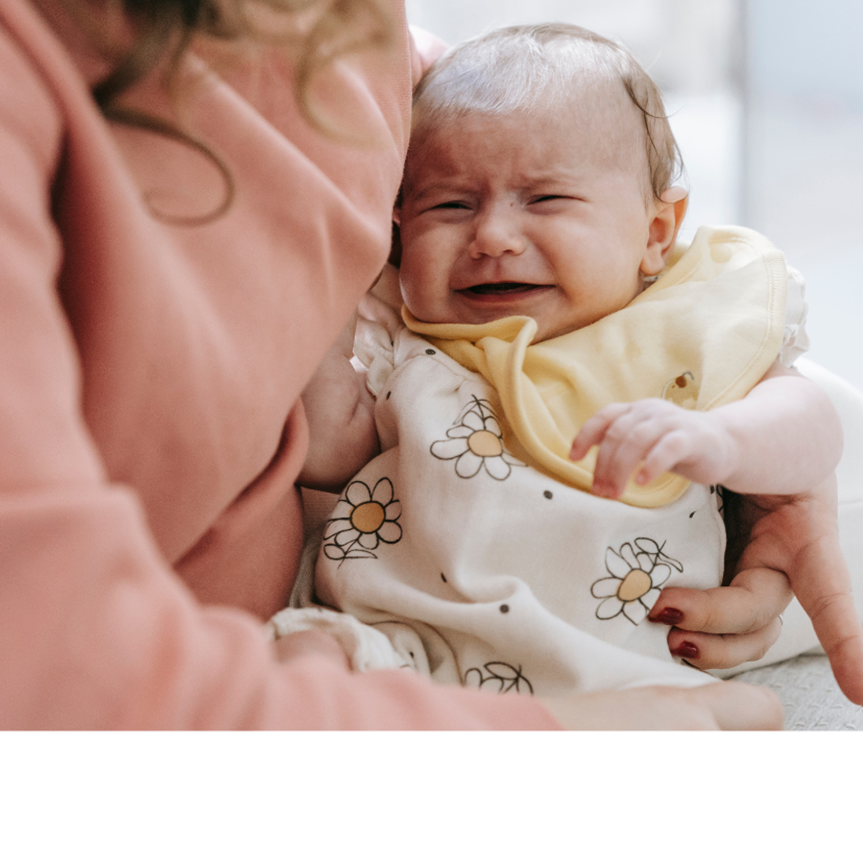
Als een baby in een groep huilt, voelt de ouder zich vaak opgelaten.
Soms is het moeilijk voor jezelf, bijvoorbeeld omdat het raakt aan je eigen (onbewuste) verdriet, omdat je je als ouder tekort voelt schieten, omdat je het vervelend vindt dat je moeite hebt gedaan om naar een cursus te komen of omdat je merkt dat het huilen van jouw kind effect heeft op andere baby’s en/of ouders. Bijna elke kersverse ouder maakt zich zorgen over deze situatie.
Huilen: sussen, troosten of erbij zijn?
Voordat ik hier verder op inga, deel ik graag wat gedachten over huilen en troosten. De visie die hieraan ten grondslag ligt, wordt onder andere onderschreven door babymassage-docenten, therapeuten, pedagogen en psychologen. Gelukkig ben ik hier niet alleen in. 😊
Baby’s huilen
Er is onderzoek gedaan naar wat de concentratie van mensen het meest verstoort. Deelnemers kregen allerlei geluiden te horen, zoals verkeer, sloopwerkzaamheden en babygehuil. Wat bleek? Het huilen van een baby had de grootste impact.
De natuur heeft dat slim geregeld: het huilen van een baby trekt onmiddellijk onze aandacht. Eerder in ons leven waren wij zelf die baby. Huilen is een doeltreffend signaal om nabijheid te krijgen.
Bij dieren werkt het anders. Wist je dat welpjes muisstil zijn als hun moeder op jacht is? Stilte is voor hen overleven. Voor mensen geldt juist het tegenovergestelde: in ons DNA zit het verlangen naar nabijheid. Als we ons alleen voelen, laten we van ons horen — letterlijk.
Waarom huilt je baby?
Baby’s huilen om de meest uiteenlopende redenen: honger, behoefte aan nabijheid of een natte luier. Dat noemen we behoeftehuilen.
Soms huilt een baby om spanning kwijt te raken (ontladingshuilen) of om oude ervaringen te verwerken (herinneringshuilen), bijvoorbeeld van de geboorte.
Bij behoeftehuilen kunnen we troosten door in de behoefte te voorzien.
Bij ontladings- of herinneringshuilen helpt het juist om het huilen toe te laten — door er simpelweg bij te zijn. Je baby voelt dan: ik mag er helemaal zijn, met alles wat ik voel.
Dat is niet altijd gemakkelijk, want het doet ook iets met jou. Zeker is, dat het geen teken is dat je geen goede ouder bent!
Wanneer je baby tijdens de cursus huilt
Tijdens de cursus lijkt het misschien het beste om je baby snel te sussen of af te leiden. Maar vaak is het juist helpend om even niets te doen behalve erbij te blijven. Je kunt je baby in je armen nemen, rustig ademhalen en je aandacht bij jullie beiden houden.
Zo geef je je baby de veiligheid om te ontladen — precies wat hij of zij nodig heeft.
Tijdens de cursus vertel ik het meestal zo:
Als je baby huilt, pak je hem of haar op, je troost of ‘bent erbij’ op jouw manier, en pas als alle spanning uit je baby’s lijfje is weggeëbd, kijk je of je weer aan kunt sluiten.
Het huilen van je baby is geen teken dat het niet goed gaat — en jij hoeft niets te ‘fixen’.
Je bent welkom met alles wat er is — met of zonder tranen 😊 en in de praktijk komt het zelden voor dat je daardoor iets van de les mist.
Meer lezen over huilen?
Dit is een greep uit mijn favoriete boeken:
- Waarom je baby huilt en hoe je je baby kunt troosten – Thomas Harms
- De taal van huilen – Aletha Solter
- Mijn baby is ontroostbaar – Rien Verdult
What if my baby cries during the course?
When a baby cries in a group, parents often feel uncomfortable.
Sometimes it’s difficult for you personally — for example, because it touches your own (unconscious) sadness, because you feel like you’re falling short as a parent, because it’s frustrating after all the effort it took to come to the class, or because you notice that your baby’s crying affects other babies and/or parents. Almost every new parent worries about this situation.
Crying: soothing, comforting, or simply being there?
Before I go further into this, I’d like to share some thoughts about crying and comforting. The vision behind this is supported by baby massage instructors, therapists, educators, and psychologists. Fortunately, I’m not alone in this. 😊
Babies cry
Research has shown what kind of sounds disturb people’s concentration the most. Participants were exposed to various noises, such as traffic, demolition work, and baby crying. The result? A baby’s cry had the biggest impact.
Nature arranged that wisely: a baby’s cry immediately captures our attention. Earlier in our lives, we were that baby ourselves. Crying is an effective signal to invite closeness.
In animals, it works differently. Did you know that lion cubs stay completely silent when their mother is hunting? For them, silence means survival. For humans, it’s the opposite: in our DNA lies the need for connection. When we feel alone, we make ourselves heard — literally.
Why does your baby cry?
Babies cry for many different reasons: hunger, a need for closeness, or a wet diaper. We call this need crying.
Sometimes a baby cries to release tension (release crying) or to process old experiences (memory crying), such as from birth.
With need crying, we can comfort by meeting the need.
With release or memory crying, it helps to simply allow the crying — by being present. Your baby then feels: I am allowed to be here completely, with everything I feel.
That’s not always easy, because it affects you, too. But one thing is certain: it’s not a sign that you’re not a good parent!
When your baby cries during the course
During a course, it may seem best to quickly soothe or distract your baby. But often, it’s actually more helpful to just be present. You can hold your baby in your arms, breathe calmly, and keep your attention on both of you.
This gives your baby the safety to release tension — exactly what he or she needs.
I usually explain it like this during the course:
When your baby cries, you pick them up, comfort them, or simply be there in your own way. Only after all the tension has flowed out of your baby’s body, you can see if you’re ready to rejoin the activity.
Your baby’s crying is not a sign that something is wrong — and you don’t have to ‘fix’ anything.
You’re welcome just as you are — with or without tears 😊. In practice, it rarely happens that you miss any part of the class because of it.
Want to read more about crying?
Here are some of my favorite books:
- The Aware Baby – Aletha Solter
- Mijn baby is ontroostbaar – Rien Verdult
- Warum Babys weinen und wie wir sie trösten können – Thomas Harms